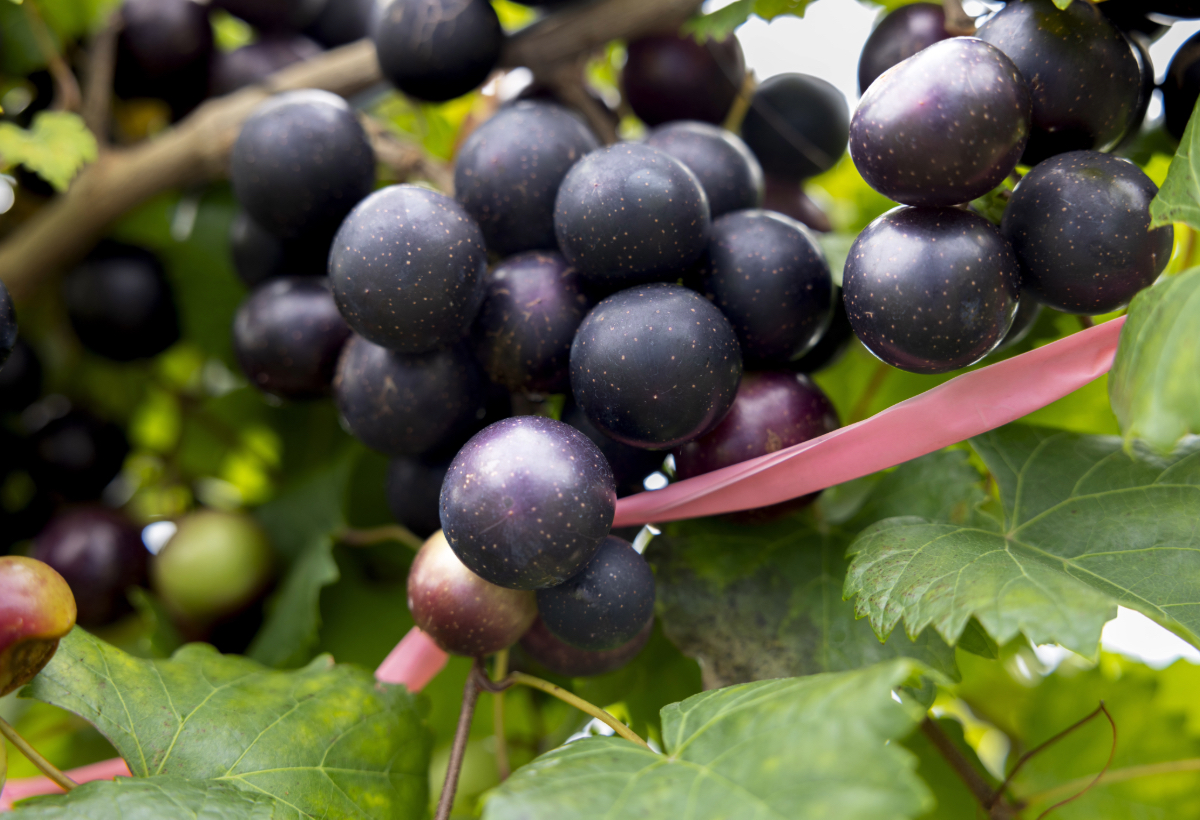
Muscadine-Grape Hybrids in Arkansas
Muscadine grapes (Muscadinia rotundifolia), native to the southeastern U.S., are prized for their natural disease resistance, unique flavors, and resilience but are limited in consumer appeal due to their thick skins, large seeds, and texture. In contrast, Vitis vinifera, the cornerstone of the U.S. grape industry, offers seedlessness, crisp texture, and thinner skins but lacks muscadines' disease resistance. Breeding high-quality, disease-resistant hybrids has been challenging due to genetic differences between the species. The "Through the Grapevine: Developing Vitis x Muscadinia Wide Hybrids for Enhanced Disease Resistance and Quality" project brings together a 31-person interdisciplinary team in the first national effort to integrate genetics, breeding, pathology, marketing, and production, advancing hybrid development and the grape industry.
Tools and Developments
As part of the research objectives for this grant, a free resource has been developed to assist growers in selecting muscadine cultivars for production. By using the "Muscadine Selection Tool", you can find cultivars best suited for your climate as well as cultivars that fit your production goals. You can search cultivars based on fruit color, harvest season, market type, flower type, or a combination of all of these characteristics.
Use the Muscadine Selection Tool
Want to Learn More?
Stay tuned for new resources and upcoming field days.
Anticipated Outcomes
- New variety testing in production trials to assess regional performance and success.
- Field trials as demonstration hubs, hosting field days and providing fruit for observation.
- Production recommendations for growers, grounded in rigorous testing.
- Development of educational resources (meetings, webinars, and materials) to help growers adopt new varieties into production.
- Reduced pesticide use and improved economic sustainability for muscadine growers in the Southeast and the broader U.S. grape industry.

Additional Resources
This project is funded by: USDA NIFA Specialty Crop Research Initiative (SCRI) , Award #2024-51181-43236, September 1, 2024 to August 31, 2028
