Extension to host May 22 webinar addressing Theileria, Asian longhorned tick
May 15, 2026
By Ryan McGeeney
University of Arkansas System Division of Agriculture
Fast Facts
- Asian longhorned tick confirmed in 10 Arkansas counties; Theileria in 15
- Theileriosis symptoms in cattle similar to anaplasmosis
- Register online
(401 words)
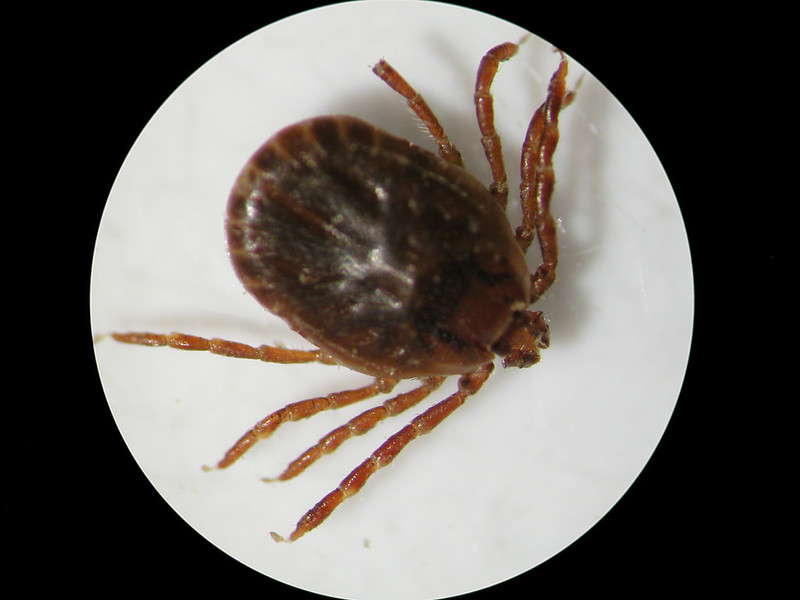
Download file photo of Asian longhorned tick
LITTLE ROCK — Researchers with the University of Arkansas Division of Agriculture will host a free webinar on May 22 addressing the prevalence of Theileria, a tick-borne pathogen affecting cattle, and the Asian longhorned tick, which is known to carry it.
The webinar, which will stream at 11:30 a.m. CDT, will be hosted by Kelly Loftin, extension entomologist, and Kirsten Midkiff, extension animal health and wellbeing specialist, both of the Division of Agriculture.
The webinar will address up-to-date location information for both the tick and the pathogen in Arkansas counties, the importance of testing and reporting, the prevalence of ticks and infection rates among cattle herds, tick management strategies, cattle management strategies and more.
There will also be a question-and-answer period with veterinarians, who will discuss their experiences with theileriosis.
A steady spread
The Asian longhorned tick (Haemaphysalis longicornis) was first confirmed in the United States in 2017. It spread rapidly across the eastern United States and was first confirmed in Arkansas in 2018. As of September 2025, it has been confirmed in 23 states, with detections as far west as Oklahoma.
Two genotypes of Theileria orientalis have steadily spread in cattle populations over the past eight years.
“When we held our first Theileria/Asian longhorned tick webinar in May 2024, two counties had confirmed cases of theileriosis genotype Ikeda, and two had established Asian longhorned tick populations,” Loftin said. “Now we are at 15 counties with confirmed T. orientalis Ikeda and 10 with established Asian longhorned tick populations. We anticipate that these numbers will grow.”
Midkiff said that in cattle, the symptoms of theileriosis tend to mirror those of anaplasmosis, a bacterial disease many cattle producers have dealt with. Symptoms may include weight loss, suppression of milk production, loss of appetite, anemia and reproductive losses.
“Both tick populations and confirmed theileriosis cases have increased substantially over the last two years,” Midkiff said. “This webinar will provide the latest information about the Asian Longhorned tick and the T. orientalis Ikeda, while also offering valuable insight into the cases and conditions veterinarians may be encountering in their clinics.
“Cattle producers, veterinarians, industry professionals and others are encouraged to attend to understand the growing threat posed by the Asian Longhorned tick and theileriosis, including how early detection, prevention and management strategies can help protect cattle health and reduce potential economic losses,” she said.
To join the webinar, register online. There is no cost to participate.
To learn about extension programs in Arkansas, contact your local Cooperative Extension Service agent or visit uaex.uada.edu. Follow us on Facebook and Instagram. To learn more about the Division of Agriculture, visit uada.edu. To learn more about ag and food research in Arkansas, visit the Arkansas Agricultural Experiment Station at aaes.uada.edu.
About the Division of Agriculture
The University of Arkansas Division of Agriculture’s mission is to strengthen agriculture, communities, and families by connecting trusted research to the adoption of best practices. Through the Agricultural Experiment Station and the Cooperative Extension Service, the Division of Agriculture conducts research and extension work within the nation’s historic land grant education system.
The Division of Agriculture is one of 22 entities within the University of Arkansas System. It has offices in all 75 counties in Arkansas and faculty on three campuses.
Pursuant to 7 CFR § 15.3, the University of Arkansas System Division of Agriculture offers all its Extension and Research programs and services (including employment) without regard to race, color, sex, national origin, religion, age, disability, marital or veteran status, genetic information, sexual preference, pregnancy or any other legally protected status, and is an equal opportunity institution.
# # #
Media Contact:
Ryan McGeeney
rmcgeeney@uada.edu
501-671-2120