Contact
Kelly M. Loftin
Professor/Extension Entomologist
Phone: 479-575-3462
Fax: 479-575-3348
Email: kloftin@uada.edu
Office:
Crawley Warren Research Lab
2601 N. Young Ave.
Fayetteville, AR 72704
Asian Longhorned Ticks & Theileriosis in Arkansas
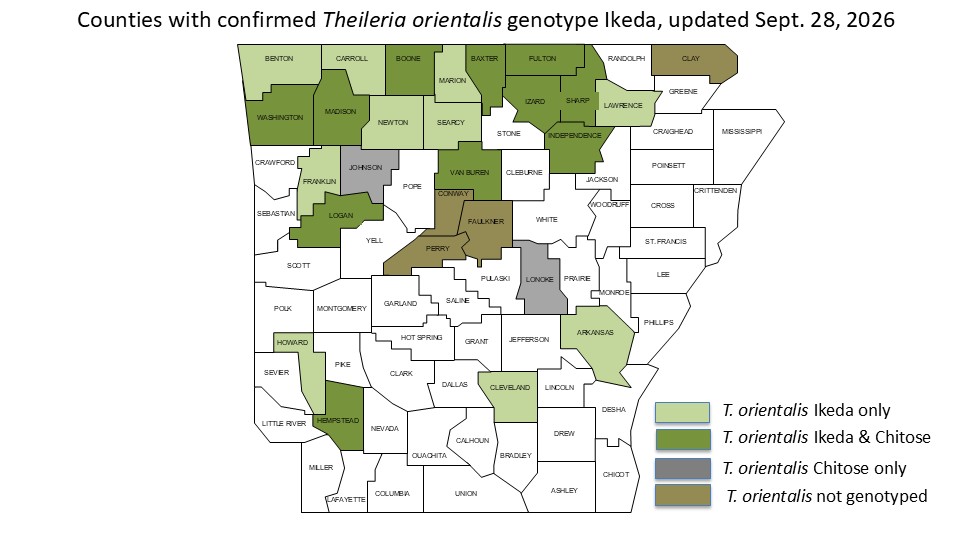
Asian longhorned ticks (Haemaphysalis longicornis) and Theileria orientalis genotypes Ikeda and Chitose have been confirmed in Arkansas. The first confirmed cases of Theileria orientalis Ikeda in Arkansas cattle were reported in 2024. Currently, 21 Arkansas counties have confirmed cases (Fig. 1). Most of the confirmed counties were in northern Arkansas. Arkansas, Cleveland, Hempstead and Howard counties are the southernmost counties with confirmed Theileria orientalis Ikeda. There is no evidence that the species of Theileria found in cattle affect humans.
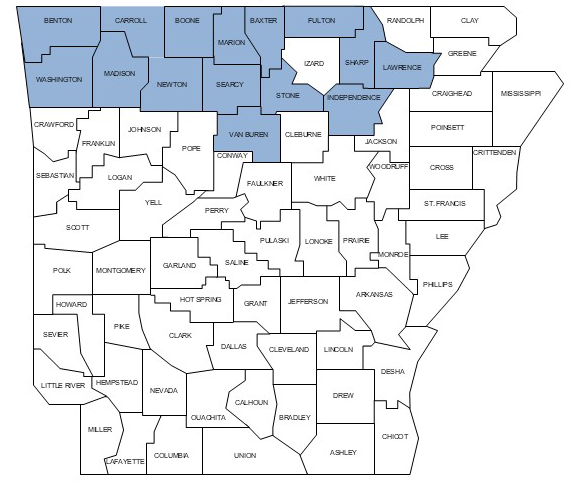
To date, Asian longhorned ticks have been confirmed in 15 north Arkansas counties (Fig. 2). During the 2025 “tick” season, we surveyed the counties positive for Theileria orientalis Ikeda but negative for Asian longhorned ticks and have confirmed Asian longhorned ticks in several of those Theileria-positive counties. Presence of Theileria in a county indicates a strong likelihood that the Asian longhorned tick is also present.
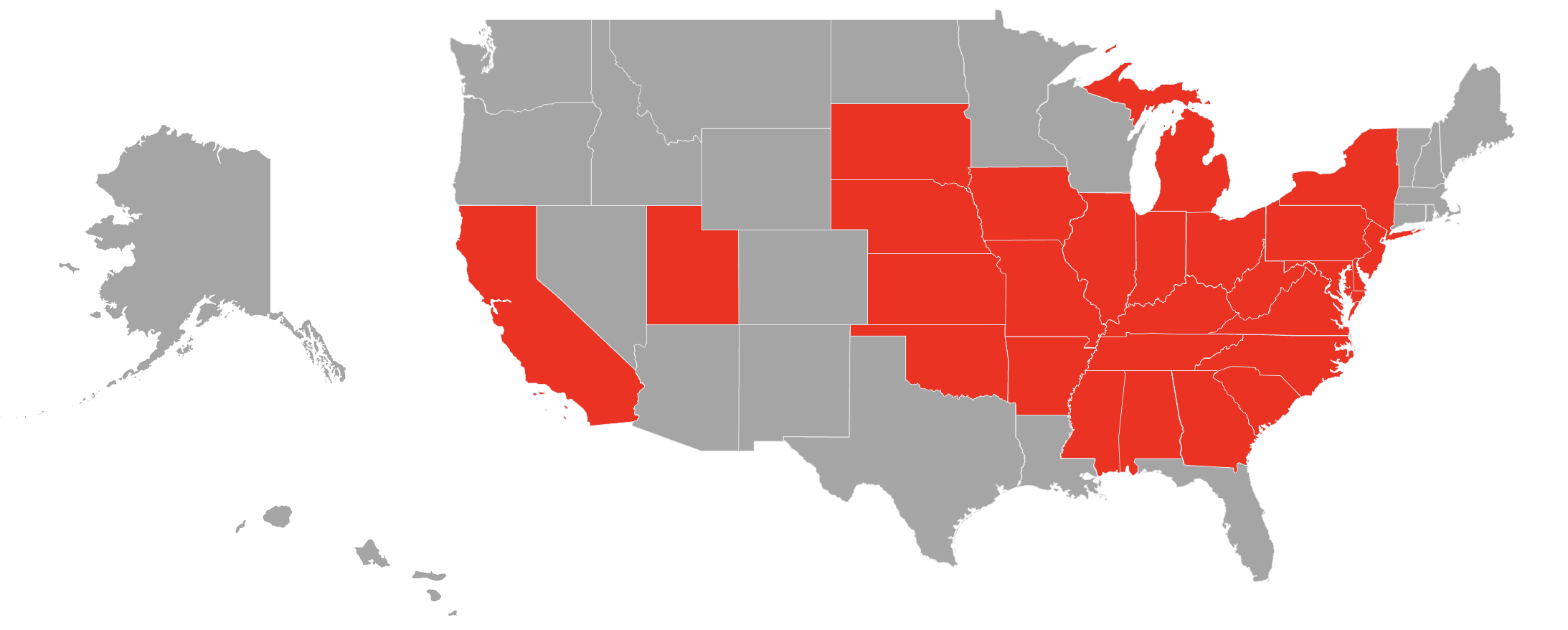
States with confirmed cattle cases of Theileria orientalis Ikeda
Recent Updates
Accredited Lab Testing
Arkansas Veterinary Diagnostic Lab (Arkansas Department of Agriculture)
AR Vet Diagnostic Lab Submission Form
Arkansas Veterinary Diagnostic Lab (University of Arkansas Division of Agriculture
UADA Vet Diagnostic Lab Mammalian Submission Form
Kansas Veterinary Diagnostic Lab (Kansas State University)
KS Testing Information & Submission Forms
Biology and Identification
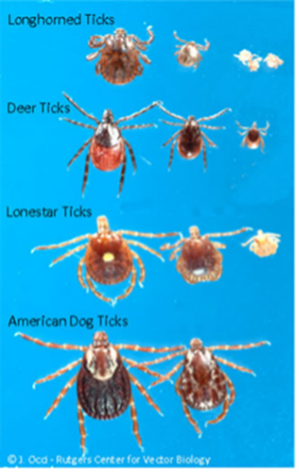
The ALT reproduces asexually (parthenogenesis). Females produce a large number of eggs (up to 2,000) after feeding on an animal, like a cow. All viable eggs will develop into females. No males are produced. This type of reproduction allows ALT populations to reach very high densities. ALTs are three-host ticks with four life stages – eggs, larvae, nymphs and adults. Each of the feeding stages (larvae, nymphs and adults) will feed on a different host. After larvae and nymphs feed, they drop off the host and molt into the next stage. Females that completely engorge will drop off the host and lay eggs and then die. ALTs are reddish brown ticks, void of markings, and possess short, blunt mouthparts. Adults are about 1/10 of an inch in size. ALTs are similar in size to blacklegged (deer) ticks but smaller than some of our other native ticks (Fig. 3). Their mouthparts are shorter and more angular than many of our native ticks. In addition, ALTs possess a distinctive elevated spur or “horn” on palpal segment three (Fig. 4), which can only be seen under a microscope.
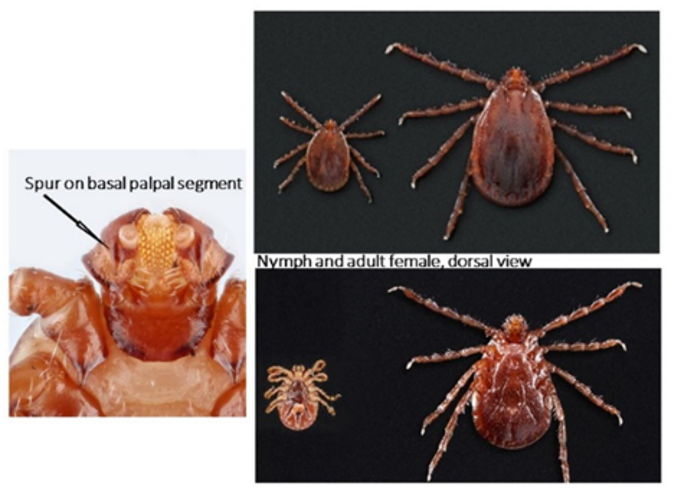
Fig. 5. ALT adult and nymph – dorsal and ventral views; spur on palp.
Impact on Cattle
Because of its reproductive strategy, ALT can reach very high population densities that may result in elevated stress and has been linked to possible exsanguination of its host. In addition, it is the biological vector of theileriosis in Arkansas and U.S cattle. Theileriosis may also be transmitted mechanically through the reuse of contaminated hypodermic needles, contaminated equipment (dehorners, tattooers, knives, etc.) and potentially by other biting arthropods (biting flies, sucking lice).
Theileria orientalis Ikeda genotype is “new” to Arkansas and because it infects blood cells, its symptoms are similar to anaplasmosis. Symptoms include weakness, going off feed, pale gums, jaundice, increased abortions and sudden death. However, in contrast to anaplasmosis, theileriosis affects both calves and adult cattle whereas anaplasmosis primarily impacts adult cattle. Currently, there are no approved treatments available for theileriosis in cattle. Medgene Labs Inc. is marketing a new prescription platform vaccine (RxPP) for Theileria in cattle.
Tail Bleeding is useful for disease and pregnancy testing. Here is how it is done.
Watch Video: How to Tail-Bleed Cattle
Asian Longhorned Tick Control
Insecticide/acaricide products and methods used to control horn flies on cattle can reduce the number of ALT that attach to cattle. However, some methods are more effective in controlling ticks than others. Below we describe multiple methods used to control Asian longhorned ticks.
Acaricides
On-animal tick control tools for Asian longhorned ticks are very similar to our current methods used to control native ticks on cattle. In addition, control methods used to control horn flies (Haematobia irritans) provide some level of control against ticks. Several acaricide/insecticide treatment methods have been used to control ticks and include dip vats, spray dip machines, whole body sprays, automatic sprayers, pour-ons, ear tags and self- treatment devices (dust bags and back rubbers). Methods that provide insecticide coverage in the hard-to-reach areas that ticks often attach (e.g. under legs, under tail) are generally more effective. Although dip vats and spray dip machines are very effective, their use is generally restricted to areas of the cattle fever tick eradication program in south Texas. Whole body sprays are an effective method of controlling ticks on cattle and only require a corral or holding chute and high pressure/high volume sprayer. However, this method requires animal handling every 2 to 4 weeks. Pour-ons (conventional insecticides and endectocide), ear tags and self-treatment devices will aid in controlling ticks but some ticks such as those under the front legs and in the udder area of the animal may remain attached. In terms of insecticide/acaricide classes for sprays and self-treatment devices, the choices are limited to pyrethroids and organophosphate insecticides. With pour-ons, we are limited to pyrethroids and endectocides. Insecticide classes used in ear tags include organophosphates, pyrethroids, macrocyclic lactones, and combinations of macrocyclic lactones and a pyrethroid. Several insecticide impregnated ear tags also contain the synergist – piperonyl butoxide. For more information on insecticide/acaricide options see the 2026 Insecticide Recommendations for Arkansas - www.uaex.uada.edu/publications/pdf/mp144/MP144_animals.pdf.
Systemic endoparasiticides (injectable macrocyclic lactones) are not currently labeled for use against Asian longhorned ticks, but studies show that they provide some protection against ticks. For example, eprinomectin has been shown to have efficacy against cattle fever ticks (Rhipicephalus species). Researchers at the University of Arkansas Division of Agriculture are currently evaluating an extended-release eprinomectin formulation (LongRange®, Boehringer Ingelheim, Duluth, GA) to determine whether a single application can reduce Asian longhorned tick numbers on cattle for up to 150 days (USDA NIFA Award No. 2026-68019-46340).
Although broadcast acaricide applications to the environment can be effective for use in small areas such as yards and recreational grounds, this option is not feasible for large areas such as pastures. For example, the more effective products that are broadcast against ticks are not labeled for pasture use. In addition, this type of control would be cost prohibitive and likely harm beneficial arthropods in pasture ecosystems. Some products containing lambda-cyhalothrin or carbaryl are labeled for pastures and could be used to treat small areas of tick “hot” spots.
Habitat modification
Habitat modification reduces tick density by making the habitat less favorable for tick survival and provide less harborage areas for potential tick hosts. Modifications such as cutting/brush hogging vegetation such as brush and tall weeds may reduce humidity, promote tick desiccation and may influence host usage of the area. Fencing cattle out of wooded areas can potentially reduce the number of ticks that attach to cattle. In some situations, well-timed controlled burning can reduce tick populations. Because the Asian longhorned tick is still spreading across Arkansas, keeping a closed herd can also help protect your cattle from the introduction of this tick as well as T. orientalis Ikeda. It is also good practice to apply an insecticide/acaricide before a new animal is introduced into the herd.
Tick vaccine
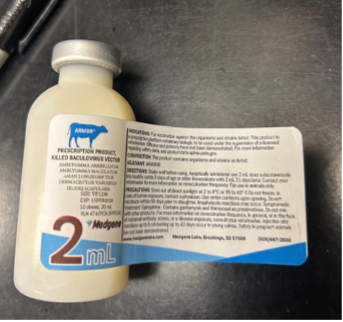
A vaccine for cattle was recently developed to help control tick infestations and potentially reduce environmental populations (Medgene Labs, Brooking, SD) (Fig. 6). This vaccine is similar to the BM86 immunomodulator vaccine by Zoetis used against Rhipicephalus annulatus and R. microplus in the permanent cattle fever tick eradication area. Medgene’s vaccine works by stimulating the immune system of the animal to produce antibodies that bind to proteins in the tick’s gut. The antibodies are then ingested by the tick when it attaches and feeds on cattle that have been immunized with the vaccine. These antibodies prevent the tick from absorbing nutrients. The vaccine is suggested to lessen the tick burdens on immunized cattle by reducing tick engorgement, tick growth, egg production, egg hatching and overall tick populations. Medgene’s literature also suggests that the vaccine will limit tick infestations in the environment and reduce disease transmission. Factors such as availability of non-immunized hosts (such as white-tailed deer) and other potential wildlife host species will potentially influence the vaccine’s impact on tick populations in the environment. Medgene’s vaccine is labeled against lone star tick (Amblyomma americanum), Gulf Coast tick (A. maculatum), American dog tick (Dermacentor variabilis), black-legged tick (Ixodes scapularis) and the Asian longhorned tick (Haemaphysalis longicornis). The Medgene anti-tick vaccine is sold as a prescription platform vaccine (RxPP), licensed by USDA. Per USDA regulations, producers of RxPP vaccines are prohibited from making claims of efficacy about their product. In 2025 we began conducting a study to evaluate this vaccine’s impact on tick attachment, tick engorgement, egg production and egg hatching.
A summary of unpublished preliminary results is outlined in the table below. This vaccine is only available through a licensed veterinarian and with approval from the Arkansas Department of Agriculture Livestock and Poultry Veterinarian.
Table 1. Summary of unpublished preliminary results from the Medgene Labs tick vaccine study.
|
Criteria |
A. americanum |
H. longicornis |
|---|---|---|
|
Tick burden on calves |
No reduction |
Delayed reduction – significant reduction at day 112, began to diverge at day 84. 66.7% decrease compared to the control (d112). |
|
Engorgement |
No reduction |
Delayed reduction beginning at day 84 through day 112 28.9-41.1% decrease compared to the control. |
|
Fecundity (number of eggs, hatch rate, and time to oviposition) |
Not evaluated, because we saw no reduction in engorgement or tick burden |
No reduction |
|
T. orientalis Ikeda transmission in cattle |
N/A |
Positives at day 28, all positive by day 112 |
|
Ticks in the pastures |
No reduction |
No reduction |
Vaccinated and control cattle used in the vaccination study were held in their respective pastures. Cattle receiving the initial and booster vaccination in 2025 were given a yearly booster in April 2026. We are currently collecting ticks from these cattle every 2 weeks and blood every 4 weeks to determine if the yearly vaccination booster will provide significant reductions in tick burden or lowered T. orientalis Ikeda parasitemia.
Research Efforts
The University of Arkansas System Division is currently conducting a study funded by a USDA NIFA grant (USDA NIFA Award No. 2024-67016-42397) to determine the prevalence of the Asian longhorned ticks and Theileria orientalis Ikeda in Arkansas. We are surveilling for Asian longhorned ticks on cattle and in the environment, as well as Theileria orientalis Ikeda in Arkansas cattle. We will identify suspect ticks collected by cattle producers, veterinarians, other state agencies and county agents. Suspect ticks can be preserved in a vial containing 90% ethanol or sent live in a vial containing a blade of grass to improve survival. Please provide name, contact information, GPS coordinates (or at least county) of collection, collection date and host (dog, cow, etc.) or environment (grass, wooded areas, edge of woods, etc.) with the sample. Samples can be returned to your local county office or sent directly to: Kelly Loftin, 2601 N. Young Ave. Fayetteville, AR 72704.