Posts
Contact
Lisa Davis
Program Associate-Leadership
Phone: 501-671-2260
Email: ldavis@uada.edu
University of Arkansas Division of Agriculture
Cooperative Extension Service
2301 S. University Avenue
Little Rock, AR 72204
LeadAR Day 2: Steel, Skills and Small-Town Strength — A Day in Blytheville
Thank you to our host, LeadAR Class 19 alumna Courtney Fisher. Day Two of our Blytheville session was a full-bodied education in manufacturing, natural resources, and infrastructure. This seminar took us deep into the economic engine of Mississippi County.
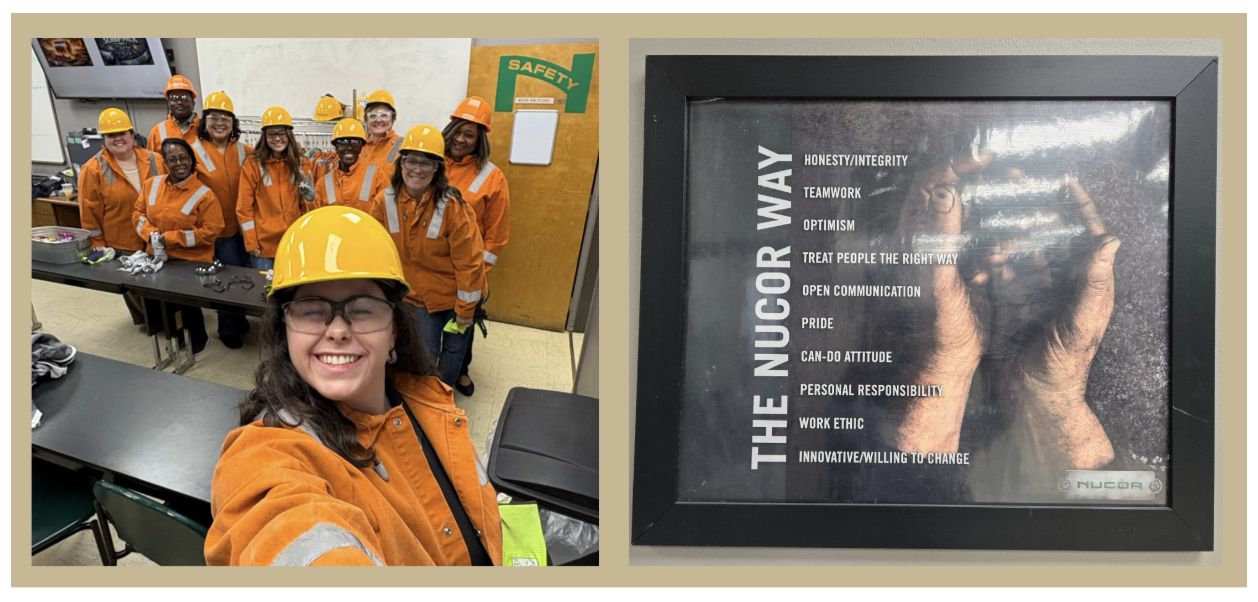
Fire, Scrap, and the Largest Steel Mill in the Country
Our morning began at Nucor Steel Arkansas. We were welcomed with relatable industry information, employee testimonials, and
safety instructions for our upcoming tour. Nucor has been very intentional about cultivating
a culture of safety and quality of life for its employees and contractors. In 2021,
2022, and again in recent years, the facility has achieved its safest years in company
history — all while also posting record profits. This mill has an on-site clinic,
a credit union, a physical therapist, a chiropractor, and even a paramedic and ambulance
stationed on the property.
Nucor Steel Arkansas is one of four Nucor facilities in Mississippi County alone, and together, Mississippi County holds the distinction of being the largest steel recycling county in the United States. The plant in Blytheville employs approximately 2,300 people in the area and is part of Nucor's broader network of more than 300 facilities across North America with more than 44,000 teammates nationwide.
What makes this operation remarkable isn't just its scale — it's its circularity. Every year, the plant recycles more than 10 million tons of scrap metal, diverting it from landfills and transforming it into technologically advanced sheet steel using electric arc furnaces. Compared to traditional steel-making methods, this process generates roughly only a third of the greenhouse gas emissions. The water used in production , over a million gallons daily, is cleaned, recycled, and reused on-site.
The steel produced here finds its way into the things we rely on every day: automotive parts (BMW, Ford, Nissan), home appliances (Whirlpool), construction materials, and structural beams. The stadium you've watched a game in, the washer and dryer in your home — there's a good chance the steel came from right here in Northeast Arkansas. Most notable among the end products: the beams that make up One World Trade Center, the Freedom Tower in New York, were rolled right here on the Mississippi — from scrap recovered after the September 11 attacks, reborn as something permanent and symbolic.
Inside the Mill: A Controlled Volcano
Once we were suited up in our flame-resistant jackets, hard hats, safety glasses, ear protection, and gloves, it was time for the walking tour.
Our group split into two teams and rotated between the hot mill and the cold mill operations. One on one tour our step tracker recorded 2.5 miles of steps and the other tour we climbed four to six flights of stairs. We observed operations of acid washes, compresses, and the melting of metals by looking through fire-resistant windows.
It was a rainy day. We learned that moisture in scrap metal is a serious concern — when wet scrap is dropped into a furnace running at extreme temperatures, water expands rapidly and violently. What followed when the charge dropped into the electric arc furnace was, as I can only describe it, exactly what I imagine an active volcano erupting could look like up close. Bright molten steel erupted and eventually flowed, glowing yellow-orange, pouring out like lava as it moved through the casting process to be shaped and cooled for further processing. The operators in the pull pit were actively tracking, monitoring, and making adjustments remaining calm and focused in the middle of what looked like controlled chaos.
Thank you Nucor guides and staff for answering all one million of our questions and for the delicious lunch.
Find your nearest recycling facility in Arkansas:
Arkansas Recycling Markets Directory
https://adeq.state.ar.us/poa/enterprise-services/market/directory.aspx
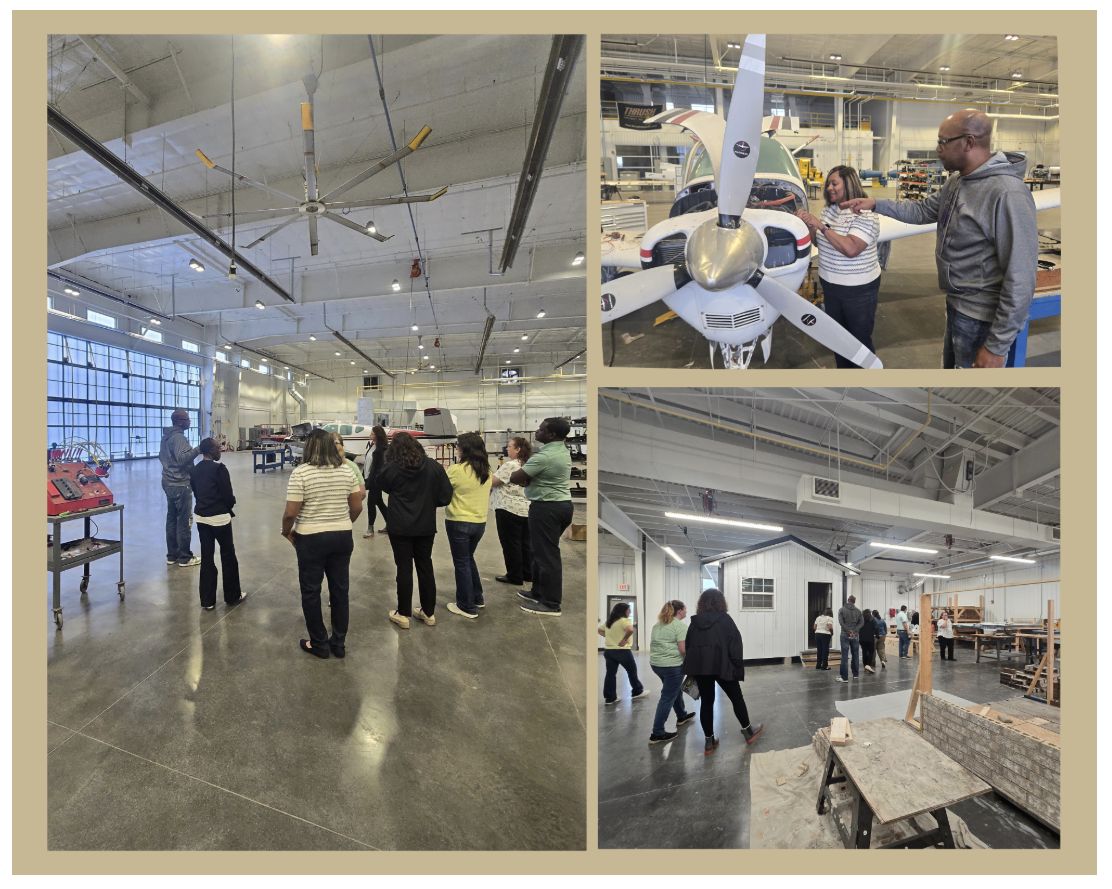
Building the Workforce: Arkansas Northeast College's Center for Allied Technologies
Our afternoon took us to Arkansas Northeast College's Center for Allied Technologies (CAT) — a 90,000-square-foot facility that is doing something quietly extraordinary for this region.
The CAT building is a hub where high school students, post-secondary learners, industry partners, and even international trainees all come to build skills. The programs housed here include:
- Aviation Maintenance (students learn to repair and maintain aircraft — not to fly them)
- Construction Trades
- HVAC
- Welding
- Industrial Maintenance
- Health Sciences / Medical Skills
- Computer Information Systems
- Robotics & Automation
Walking through the aviation hangar, a wide, bright space with actual aircraft in various states of repair, and then into the construction lab where students had built a full-sized structure inside the building, I could feel the intentionality of the place. Each space offered a full hands-on working environment.
Preparing Young People Before They Graduate
One of the most impactful aspects of Arkansas Northeast College's approach is how it reaches students while they're still in high school. Currently, over 600 high school students are taking college-credit coursework through the center — about 48% of the college's total enrollment. For those who aren't ready for college credit, the center still offers hands-on exposure to skilled trades during school visits, giving students a taste of careers they may never have considered.
Student Success — and What the Data Actually Shows
Here's a statistic that almost made me enroll on the spot: Arkansas Northeast College graduates, many coming out of two-year technical programs, are, after five to seven years in the workforce, consistently out-earning graduates of four-year universities in Arkansas. The data tracks alumni earnings over time, and the combination of lower tuition costs, earlier entry into high-demand industries, and substantial performance bonuses, like those at Nucor, makes this upward financial trajectory a reality.
Arkansas Northeast College also offers a paid two-year internship program in partnership with Nucor's Steel Tech school, designed for 18-to-20-year-olds who want to earn while they learn. Interns graduate with an associate degree and a direct pathway into mill employment. Summer internship opportunities exist for four-year university students as well: engineering, safety, and technical students spend three months on-site working on real projects that directly benefit Nucor's operations.
My hope is that other educational institutions and organizations are inspired by this model that creates high-quality, high-paying career paths like this one right here in Northeast Arkansas. And there is infrastructure right here in Blytheville in full operation and preparing for further expansion.
🌐 For more information on Arkansas Northeastern College - Center for Allied Technologies
https://www.anc.edu/technicalcenter
The Bigger Picture: A Region Investing in Itself
My ‘aha’ moment of Day Two in Blytheville was the intentional interconnection between industry, education and community. Blytheville is more than a company town. For example, in addition to producing steel and providing high paying entry level jobs, Nucor funds scholarships, sponsors community events, provides disaster relief, feeds teachers on appreciation week, and considers itself a stakeholder in the well-being of every family in the county.
Arkansas Northeast College recruits from high schools, works with employers to shape curriculum, and tracks whether graduates actually thrive.
Fellow cohort member Adam Watson put it well during our closing reflections:
"I think everybody talks positively a lot about small-town Arkansas and rural America, the renaissance of these close-knit communities, and that's usually at an individual level. They seem to be doing a really good job of that all around here — it's teamwork, there have been public-private entities, and everybody's pitching in to support each other. And it seems to be really successful."
Austin DuVall added:
"This is an area that has a lot to say, to say the least. The people we've met seem to have a very firm, shared, collaborative vision for what they want and what they're working toward."
I usually only stop in Blytheville to gas up my vehicle while on road trips. But after this session, I left Blytheville with two things I didn't have when I arrived: a deeper respect for the intentional and internal collaboration of this town, and a renewed belief that rural Arkansas is investing in the skill shaping of our workforce in meaningful careers and training options.
LeadAR is a program designed to help Arkansans broaden their understanding of issues and opportunities facing our state and strengthen their ability to make a difference. For more information about LeadAR, visit the website or contact Dr. Julie Robinson at jrobinson@uada.edu, or Lisa Davis at ldavis@uada.edu.